
The Evolution of the Caesar Salad: A History of a Classic
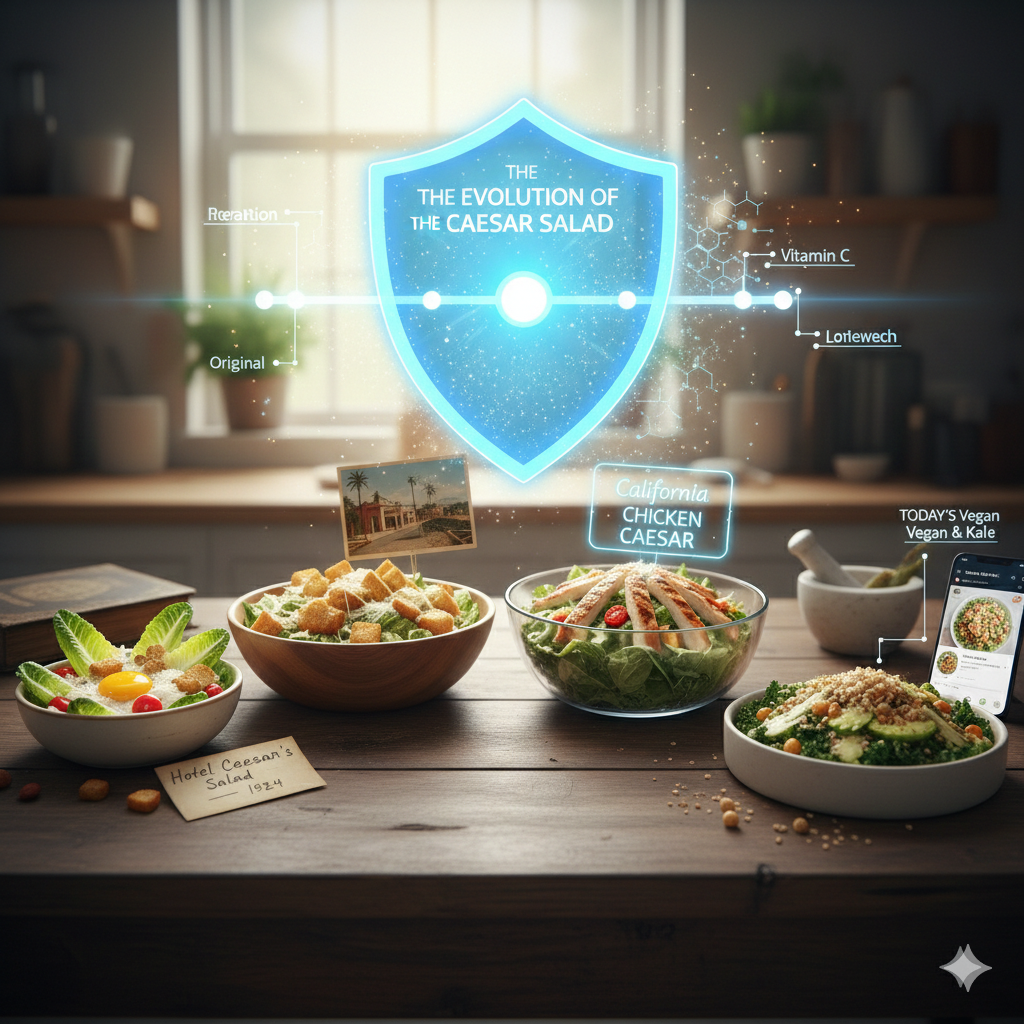
Some dishes don’t age—they adapt. The Caesar salad is one of them. What began as a simple, almost improvised plate has traveled decades, continents, and countless menus—changing just enough to stay relevant.
Today, the Caesar salad is everywhere. But behind the parmesan shavings and creamy dressing lies a story of necessity, balance, and evolution.
Born from Scarcity, Not Luxury
The original Caesar salad wasn’t designed to impress. It was created in the 1920s using what was available at the moment—romaine lettuce, eggs, olive oil, lemon, garlic, and bread.
No chicken. No anchovy paste. No heavy cream.
It was a lesson in restraint: a few good ingredients, treated well.
The Original Formula
The early Caesar salad relied on contrast:
- Crisp romaine for structure
- Egg yolk for richness
- Lemon for brightness
- Olive oil for balance
- Garlic and cheese for depth
It was tossed tableside, eaten fresh, and never meant to sit around.
How It Changed Over Time
As the salad traveled, additions crept in. Anchovies added umami. Chicken turned it into a meal. Cream and bottled dressings made it heavier—and longer-lasting.
Convenience slowly replaced craft.
What was once light and balanced became rich, calorie-dense, and often disconnected from its roots.
The Modern Caesar Dilemma
Today’s Caesar salads often struggle with excess. Too much dressing. Too many croutons. Proteins piled high.
The core idea—balance—is easily lost.
A Caesar works best when it respects its original intent: freshness, contrast, and restraint.
The SproutBites Way: Respect the Roots
At SproutBites, we see classics as frameworks, not formulas. A Caesar-inspired bowl can be lighter, cleaner, and more functional—without losing its soul.
Real oils. Thoughtful portions. Fresh preparation.
Why the Caesar Still Matters
The Caesar salad endures because it understands balance. Crisp meets creamy. Acid meets fat. Simple meets satisfying.
It reminds us that great food doesn’t need excess—it needs intention.

BooBoo’s Quick Bite
BooBoo says: “The original Caesar was smart, not heavy. Somewhere along the way, it got lost in extras. Bring it back to basics, and it still shines.”
A Classic That Keeps Adapting
The Caesar salad isn’t frozen in time—it evolves with how we eat. When we return to balance and freshness, the classic feels new again.
History tastes better when you respect it.