
Our Commitment to Zero Waste: How we Handle Kitchen Scraps
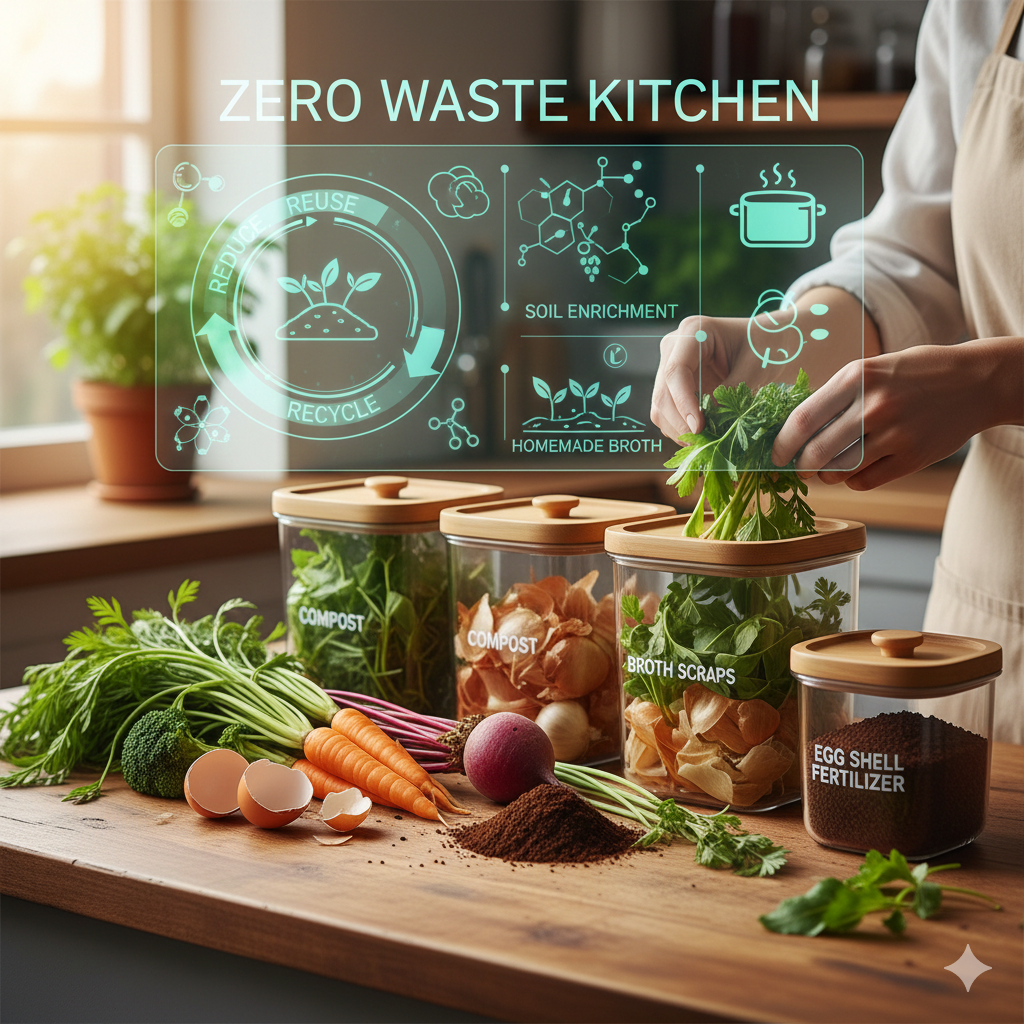
Every kitchen creates waste—but not all waste is useless. What most people see as scraps, we see as unfinished ingredients.
Zero waste isn’t about perfection. It’s about intention. It’s about asking one simple question every day: Does this really need to be thrown away? At SproutBites, the answer is often no.
Why Kitchen Waste Matters
Food waste isn’t just a trash problem—it’s a resource problem. When vegetables are wasted, so are the water, soil, energy, and labor that went into growing them.
Reducing waste is one of the most direct ways to respect food, farmers, and the environment.
Scraps Are Not the Enemy
Peels, stems, trimmings, and ends are often rich in fiber, minerals, and flavor. They’re removed for texture or presentation—not because they lack value.
The key is knowing where each scrap belongs.
Step One: Smart Prep, Less Waste
We start by cutting consciously. Instead of over-trimming vegetables for “perfect” looks, we minimize excess removal.
Ugly cuts still taste great—and nutrition doesn’t care about symmetry.
Step Two: Repurpose What We Can
Many scraps get a second life:
- Stems & Leaves: Used in stocks, chutneys, or blended bases.
- Vegetable Ends: Collected for broths and flavor infusions.
- Herb Trimmings: Added to oils or composted for soil enrichment.
Nothing is reused blindly. Food safety always comes first.
Step Three: Compost the Rest
What can’t be repurposed goes back to the earth. Composting turns organic waste into nutrient-rich soil instead of landfill burden.
This closes the loop—food feeds people, scraps feed the soil, and the soil grows more food.
The SproutBites Way: Respect Every Ingredient
At SproutBites, zero waste isn’t a trend—it’s a mindset. We buy thoughtfully, prep carefully, and reuse responsibly.
When you respect ingredients, waste naturally decreases.
Why Small Actions Matter
One kitchen won’t save the planet. But many kitchens making better choices can create real impact.
Zero waste isn’t about doing everything—it’s about doing something, consistently.
BooBoo’s Quick Bite
BooBoo says: “If food had feelings, it wouldn’t want to be trashed. Use what you can, compost the rest, and stop expecting perfection from vegetables. Nature doesn’t do waste—humans do.”
Less Waste, More Meaning
Handling scraps responsibly isn’t glamorous—but it’s powerful. It turns everyday cooking into an act of care.
This is how small choices become long-term values.